In short
- In the Western churches, Lent 2027 begins on Ash Wednesday, February 10, and Easter Sunday is March 28.
- The forty days are the weekdays and Saturdays from February 10 to March 27; the six Sundays in between are not counted.
- This plan gives one short passage for each of the forty days, a Gospel for each Sunday, and a reading for every day of Holy Week, March 21 to 28.
- Orthodox Great Lent in 2027 begins on Clean Monday, March 15, and leads through Lazarus Saturday on April 24 to Pascha on May 2.
- Lent rests on three practices that Jesus names together in Matthew 6: prayer, fasting and giving to those in need.
Lent 2027 begins on Ash Wednesday, February 10, and leads to Easter Sunday, March 28. This plan gives you one short Bible passage for each of the forty days, a Gospel for each Sunday, and a reading for every day of Holy Week, from the call to return in Joel to the empty tomb in John.
Most readings are under twenty verses and take five to ten minutes.
What is Lent?
Lent is the season of preparation before Easter, kept by Catholic, Anglican, Lutheran, Methodist and many other Western churches. It is a time of repentance and return, modeled on the forty days Jesus spent fasting in the wilderness (Luke 4:1-13).
The Catechism of the Catholic Church says that by the forty days of Lent the Church unites herself each year to the mystery of Jesus in the desert (CCC 540). The season rests on three practices that Jesus names side by side in the Sermon on the Mount: giving to those in need, prayer and fasting (Matthew 6:1-18).
Lent is not meant to be grim. Its direction is toward Easter, and every week of it is walked in that light.
12“Yet even now,” says Yahweh, “turn to me with all your heart,
and with fasting, and with weeping, and with mourning.” 13Tear your heart and not your garments,
and turn to Yahweh, your God;
for he is gracious and merciful,
slow to anger, and abundant in loving kindness,
and relents from sending calamity.
When is Lent in 2027?
| Day | Date in 2027 |
|---|---|
| Ash Wednesday | February 10 |
| First Sunday of Lent | February 14 |
| Palm Sunday | March 21 |
| Holy Thursday | March 25 |
| Good Friday | March 26 |
| Holy Saturday | March 27 |
| Easter Sunday | March 28 |
After Easter, the Ascension falls on May 6 and Pentecost on May 16, 2027.
Why forty days, and why are Sundays not counted?
Count the days from Ash Wednesday, February 10, to Holy Saturday, March 27, and you get 46. Six of those days are Sundays: February 14, 21 and 28, and March 7, 14 and 21.
Sunday is the day of the resurrection, every week of the year. For that reason Sundays were traditionally not treated as fast days, even in Lent. Take the six Sundays out of the 46 and forty days remain.
The churches reckon the season in slightly different ways. The Catholic calendar says that the forty days of Lent run from Ash Wednesday up to the Mass of the Lord's Supper on Holy Thursday evening, and treats the three days that follow as their own celebration, the Paschal Triduum. Many Protestant churches simply speak of forty days plus Sundays, ending on Holy Saturday. Either way the days in the table below are the same.
In this plan the forty counted days are numbered. Sundays have a Gospel reading of their own and no number.
What do the six weeks of Lent focus on?
The plan follows a single line through the season.
- The opening days (February 10–13): Return. The prophets' call to come back, and Jesus' teaching on prayer, fasting and giving.
- Week 1: The wilderness. Temptation, hunger and trust, with Israel and with Jesus.
- Week 2: The covenant. Abraham, Moses, and the voice on the mountain.
- Week 3: Thirst. Water from the rock, the woman at the well, and the patience of God.
- Week 4: Light and mercy. The man born blind, and grace that is a gift.
- Week 5: Toward the cross. Dry bones, a new covenant, a grain of wheat.
- Holy Week (March 21–28). Day by day from the entry into Jerusalem to Easter morning.
The Sunday Gospels here are chosen to fit this line. They are not the official Sunday lectionary of any church, so what you hear in worship may differ. Let your church's readings come first.
The Lent 2027 reading plan, day by day
Read the passage once to follow it, then once more slowly. Lectio Divina is a good method for these readings, and the evening Examen pairs naturally with a season of honest self-examination.
The opening days: Return (February 10 – 13)
| Date | Day | Reading | What to notice |
|---|---|---|---|
| Wed, Feb 10 | 1 | Joel 2:12-17 | Ash Wednesday: return with all your heart |
| Thu, Feb 11 | 2 | Psalm 51 | A prayer for a clean heart |
| Fri, Feb 12 | 3 | Isaiah 58:1-12 | The fast that God chooses |
| Sat, Feb 13 | 4 | Matthew 6:1-18 | Giving, prayer and fasting done in secret |
10Create in me a clean heart, O God.
Renew a right spirit within me. 11Don’t throw me from your presence,
and don’t take your Holy Spirit from me. 12Restore to me the joy of your salvation.
Uphold me with a willing spirit.
Week 1: The wilderness (February 14 – 20)
| Date | Day | Reading | What to notice |
|---|---|---|---|
| Sun, Feb 14 | Sunday | Matthew 4:1-11 | Jesus is tempted in the wilderness |
| Mon, Feb 15 | 5 | Deuteronomy 8:1-10 | Forty years, manna, and what a person lives by |
| Tue, Feb 16 | 6 | Exodus 16:1-18 | A day's portion of bread, gathered each day |
| Wed, Feb 17 | 7 | Psalm 91 | Shelter in the shadow of the Almighty |
| Thu, Feb 18 | 8 | Luke 4:1-13 | Luke's account of the forty days |
| Fri, Feb 19 | 9 | Hebrews 4:14-16 | A high priest who was tempted as we are |
| Sat, Feb 20 | 10 | Psalm 32 | The relief of sin forgiven |
Week 2: The covenant (February 21 – 27)
| Date | Day | Reading | What to notice |
|---|---|---|---|
| Sun, Feb 21 | Sunday | Mark 9:2-10 | The Transfiguration, and a voice from the cloud |
| Mon, Feb 22 | 11 | Genesis 12:1-9 | Abram leaves for a land he has not seen |
| Tue, Feb 23 | 12 | Genesis 22:1-18 | Abraham and Isaac on the mountain |
| Wed, Feb 24 | 13 | Exodus 3:1-15 | The burning bush and the Name |
| Thu, Feb 25 | 14 | Psalm 27 | Light, salvation, and waiting |
| Fri, Feb 26 | 15 | Romans 8:31-39 | Nothing can separate us from God's love |
| Sat, Feb 27 | 16 | Luke 15:11-32 | The father who runs to meet his son |
Week 3: Thirst (February 28 – March 6)
| Date | Day | Reading | What to notice |
|---|---|---|---|
| Sun, Feb 28 | Sunday | John 4:5-26 | The woman at the well |
| Mon, Mar 1 | 17 | Exodus 17:1-7 | Water from the rock |
| Tue, Mar 2 | 18 | Psalm 63 | Thirsting for God in a dry land |
| Wed, Mar 3 | 19 | Isaiah 55:1-11 | An invitation to the thirsty, free of charge |
| Thu, Mar 4 | 20 | Luke 13:1-9 | The fig tree given one more year |
| Fri, Mar 5 | 21 | Psalm 103 | How far God removes our wrongs |
| Sat, Mar 6 | 22 | Luke 18:9-14 | The Pharisee and the tax collector |
Week 4: Light and mercy (March 7 – 13)
| Date | Day | Reading | What to notice |
|---|---|---|---|
| Sun, Mar 7 | Sunday | John 9:1-17 | The man born blind washes and sees |
| Mon, Mar 8 | 23 | Ephesians 5:8-14 | Out of darkness, into light |
| Tue, Mar 9 | 24 | Psalm 23 | The shepherd, the valley, the table |
| Wed, Mar 10 | 25 | John 3:14-21 | The Son of Man lifted up |
| Thu, Mar 11 | 26 | Ephesians 2:1-10 | Saved by grace, a gift |
| Fri, Mar 12 | 27 | Numbers 21:4-9 | The bronze serpent in the wilderness |
| Sat, Mar 13 | 28 | John 8:1-11 | A woman accused, and no stone thrown |
Week 5: Toward the cross (March 14 – 20)
| Date | Day | Reading | What to notice |
|---|---|---|---|
| Sun, Mar 14 | Sunday | John 11:1-44 | The raising of Lazarus |
| Mon, Mar 15 | 29 | Ezekiel 37:1-14 | Breath enters the dry bones |
| Tue, Mar 16 | 30 | Jeremiah 31:31-34 | A law written on the heart |
| Wed, Mar 17 | 31 | John 12:20-33 | The grain of wheat that falls into the earth |
| Thu, Mar 18 | 32 | Hebrews 5:7-9 | Prayers offered with tears |
| Fri, Mar 19 | 33 | Philippians 2:5-11 | Obedient to the point of death |
| Sat, Mar 20 | 34 | John 12:1-11 | Mary anoints Jesus at Bethany |
What do you read each day of Holy Week?
Holy Week is the last week before Easter. In 2027 it runs from Palm Sunday, March 21, to Easter Sunday, March 28. The readings slow down and follow the Gospels almost hour by hour.
| Date | Day | Reading | What to notice |
|---|---|---|---|
| Sun, Mar 21 | Palm Sunday | Matthew 21:1-11 | The entry into Jerusalem |
| Mon, Mar 22 | 35 | Mark 11:15-19 | Jesus clears the temple |
| Tue, Mar 23 | 36 | Mark 12:28-34 | The first commandment and the second |
| Wed, Mar 24 | 37 | Matthew 26:14-25 | Thirty pieces of silver |
| Thu, Mar 25 | 38 | John 13:1-17 | Holy Thursday: Jesus washes the disciples' feet |
| Fri, Mar 26 | 39 | Isaiah 53:1-12 and John 19:16-30 | Good Friday: the suffering servant, and the cross |
| Sat, Mar 27 | 40 | Matthew 27:57-66 | Holy Saturday: the sealed tomb, and silence |
| Sun, Mar 28 | Easter Sunday | John 20:1-18 | Mary Magdalene hears her name |
4Surely he has borne our sickness
and carried our suffering;
yet we considered him plagued,
struck by God, and afflicted. 5But he was pierced for our transgressions.
He was crushed for our iniquities.
The punishment that brought our peace was on him;
and by his wounds we are healed. 6All we like sheep have gone astray.
Everyone has turned to his own way;
and Yahweh has laid on him the iniquity of us all.
On Good Friday there are two readings. If you have time for only one, read John. On Holy Saturday the reading is short on purpose. It is a day for waiting.
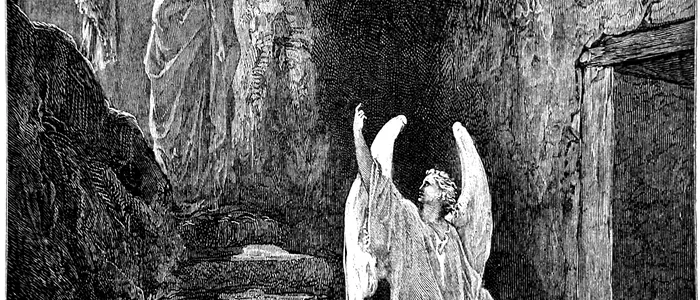
5The angel answered the women, “Don’t be afraid, for I know that you seek Jesus, who has been crucified. 6He is not here, for he has risen, just like he said. Come, see the place where the Lord was lying.
If you would like one more reading, Easter Monday is a good day for the walk to Emmaus (Luke 24:13-35). There is a longer reflection on that story in what the road to Emmaus means.
When is Orthodox Great Lent in 2027?
The Orthodox Church keeps Great Lent, and in 2027 its dates fall five weeks later than the Western ones. The Orthodox churches calculate the date of Pascha differently, so some years the two Easters coincide and some years, like this one, they are far apart.
| Day | Date in 2027 |
|---|---|
| Clean Monday (Great Lent begins) | March 15 |
| Sunday of Orthodoxy | March 21 |
| Sunday of St. Gregory Palamas | March 28 |
| Sunday of the Veneration of the Cross | April 4 |
| Sunday of St. John of the Ladder | April 11 |
| Sunday of St. Mary of Egypt | April 18 |
| The forty days end | Friday, April 23 |
| Lazarus Saturday | April 24 |
| Palm Sunday | April 25 |
| Holy Friday | April 30 |
| Pascha | May 2 |
The counting is different too. Great Lent begins on a Monday, not a Wednesday, and its forty days run continuously, Sundays included, until the Friday before Lazarus Saturday. Lazarus Saturday and Palm Sunday then stand as a pair of feast days between Lent and Holy Week. Orthodox Pentecost in 2027 is June 20.
The Orthodox Church in America describes the season as a time of renewed prayer, fasting and almsgiving, and insists that it is not a season of gloom: the first hymns of Lent speak of beginning the fast with delight.
If you are Orthodox, your parish's services and appointed readings are the heart of the season, and this plan can only sit beside them. Two readings from it belong naturally to your calendar: the raising of Lazarus on Lazarus Saturday (John 11:1-45) and the entry into Jerusalem on Palm Sunday (John 12:1-18).
How do you keep a Lent reading plan going?
Forty days is long enough to lose the thread. A few choices at the start make it easier to keep.
- Attach the reading to something you already do. The first coffee, the commute, the last quiet minutes of the evening.
- Use the day numbers. If today is March 3, you are on day 19. You always know where you are.
- Keep one line from each reading. Write it down, or carry it through the day as a short prayer.
- Start again without catching up. If you miss three days, read today's passage. Nothing in the plan depends on the day before.
- Let Sundays be lighter. One Gospel, read slowly, and rest.
Emmaus has guided journeys for the seasons, Advent and Lent, as part of Emmaus+, with a reading and a prayer for each day. The whole Bible in the app is free and offline, so you can follow the table above there without a subscription.
If you are reading this before Christmas, the Advent 2026 reading plan comes first. Lent will still be here on February 10, beginning with ashes and a single sentence from Joel about returning with all your heart.
Questions
When does Lent start and end in 2027?
In the Western churches, Lent 2027 starts on Ash Wednesday, February 10. Palm Sunday is March 21, Good Friday is March 26, and Easter Sunday is March 28. In the Catholic calendar, Lent formally ends on the evening of Holy Thursday, March 25, when the three days of the Paschal Triduum begin. Many Protestant churches count Lent through Holy Saturday, March 27.
Why is Lent 40 days if there are 46 days from Ash Wednesday to Easter?
From Ash Wednesday, February 10, to Holy Saturday, March 27, there are 46 days. Six of them are Sundays. Every Sunday is kept as a celebration of the resurrection, so Sundays were traditionally not counted as fast days. Taking the six Sundays away leaves forty days, the number that recalls Jesus' forty days of fasting in the wilderness.
What should I read in the Bible during Lent?
Lent readings follow the path from repentance to the cross. Common choices are Joel 2 and Psalm 51 at the start, the temptation of Jesus in Matthew 4 and Luke 4, the wilderness stories in Exodus and Deuteronomy, the great encounters in John 4, 9 and 11, and the Passion in the last week. A day-by-day plan spreads these across the forty days.
When is Orthodox Lent in 2027?
Orthodox Great Lent in 2027 begins on Clean Monday, March 15. Its forty days end on Friday, April 23. Lazarus Saturday follows on April 24 and Palm Sunday on April 25, then Holy Week, with Holy Friday on April 30 and Pascha, the Orthodox Easter, on Sunday, May 2. That is five weeks after Western Easter in 2027.
Do I have to fast to follow a Lent reading plan?
No. A reading plan is one way of keeping Lent, and it stands on its own. Churches differ in what they ask about fasting, and health, age and circumstances matter, so follow your own church's guidance and your doctor's advice. If you do give something up, the reading gives the empty space a purpose: a few minutes with Scripture where something else used to be.
Sources
- Universal Norms on the Liturgical Year and the Calendar, nos. 27–31 (Lent)
- Catechism of the Catholic Church, 540
- Orthodox Church in America: Great Lent
- Orthodox Church in America: Sundays of Lent
- Orthodox Church in America: Lazarus Saturday and Palm Sunday
- American Carpatho-Russian Orthodox Diocese: Listing of movable feasts, 2026–2029